
It takes a fair amount of confidence for a bear to balance on one foot and raise its arms in the air. It takes even more skill to carve that pose from a solid piece of stone.
That is the appeal of the Inuit dancing bear. The form is instantly recognizable, but each carving has its own character, shaped by the artist, the stone, and the details they choose to emphasize. Some feel playful and expressive. Others have a powerful presence that makes them impossible to ignore.
At GTA Inuit Art, we have more than 75 dancing bears in stock, with pieces ranging from approachable smaller carvings to substantial collector works. If you have been looking for a dancing bear for your home, office, or collection, come see our selection in person or contact us, and we’ll help you find one worth stopping for.
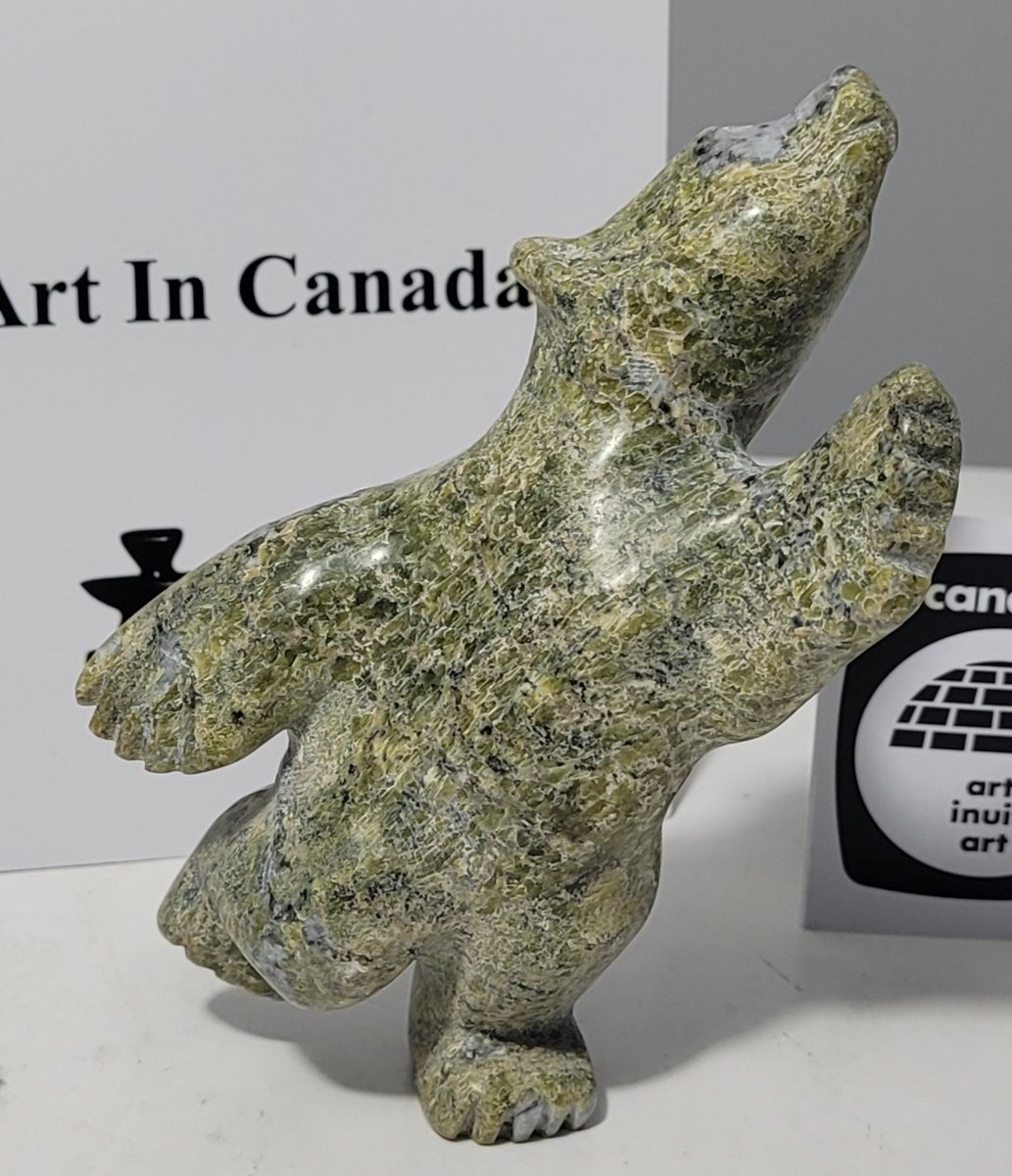
The name makes sense the moment you see one. The bear stands upright, often balanced on one foot with its arms raised, creating an unexpected sense of movement in a sculpture carved from solid stone.
The form is closely associated with Pauta Saila, one of the best-known Inuit sculptors from Kinngait, formerly Cape Dorset. Saila became widely recognized for his distinctive bear carvings and helped make this particular form one of the most recognizable in Inuit sculpture.
Other Inuit artists have created their own versions of the dancing bear, and that is where things get interesting. Put several together, and the differences become surprisingly easy to spot.
The pose may be familiar, but the finished sculpture can feel completely different from one artist to another.
At GTA Inuit Art, we love showing customers that variety. It is one thing to see a dancing bear in a photograph. It is another to stand in front of several and compare them yourself.
A dancing bear has quite a job to do. It needs to look balanced, expressive, and convincing while being carved from a solid piece of stone. That is part of the fun of looking closely.
Look at the feet, legs, body, and raised arms. The artist has to create a convincing sense of balance while giving the sculpture enough strength and structure to hold its form.
The pose can look effortless when it is finished. The carving itself is anything but.
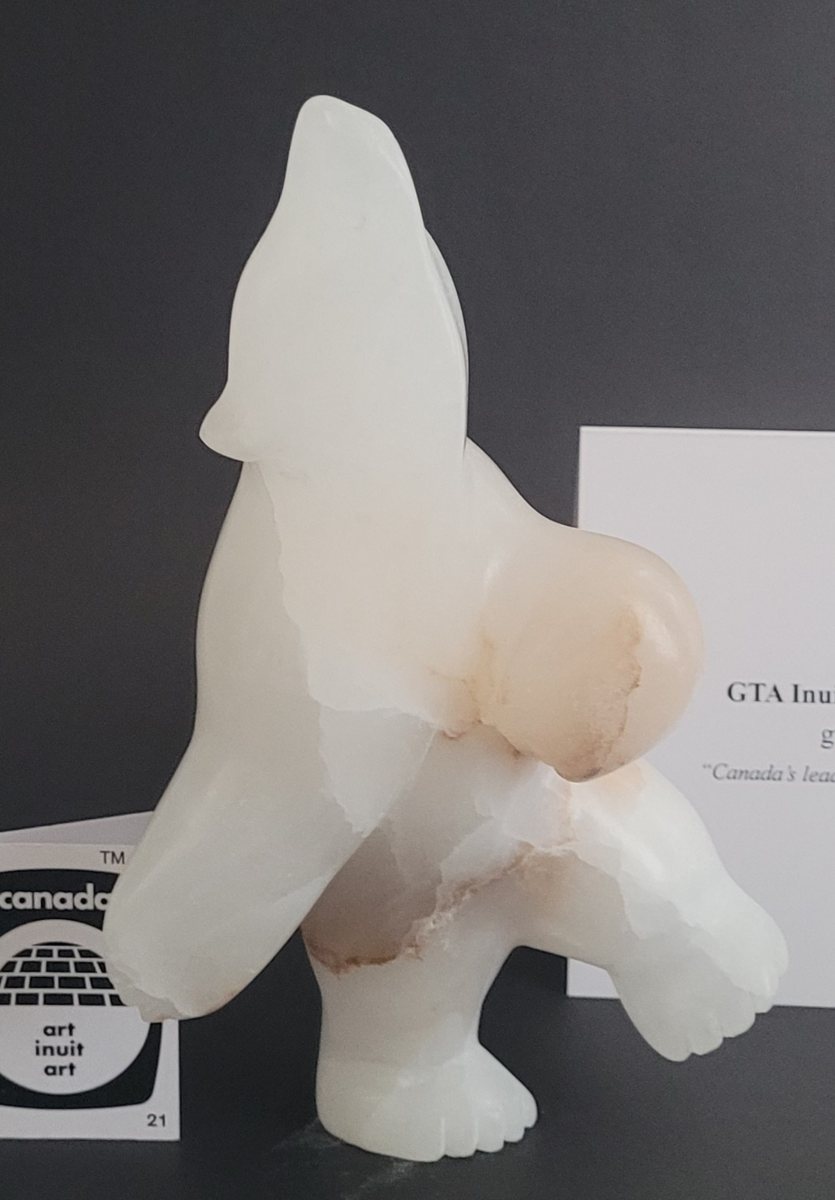
Natural stone is never completely predictable, which is one reason no two pieces have quite the same appearance. Look for:
These characteristics can give a bear much of its visual personality.
Two bears can share the same general pose and still have very different characters. Pay attention to:
Then step back.
That last part is important. A carving can look fascinating up close, but you also want to know how it feels when viewed from across the room.
This is one of the comparisons we hear often, and it is easy to see why. Both forms capture the bear beautifully, but they have very different visual personalities.
The upright pose immediately grabs attention. Raised arms, a lifted body, and the characteristic balance on one foot give the sculpture an active, expressive quality.
A dancing bear can be particularly effective when you want the sculpture to become a focal point rather than simply another object on a shelf.
A walking bear has a more grounded presence. Its horizontal form can work especially well on:
If you are specifically looking for walking bear sculptures for sale, we recommend looking at both forms before making up your mind. View Walking Bears →
At GTA Inuit Art, we currently have 75+ dancing bears in stock, so you can compare a good range of sizes, stones, styles, and price points rather than judging the form from a single example.
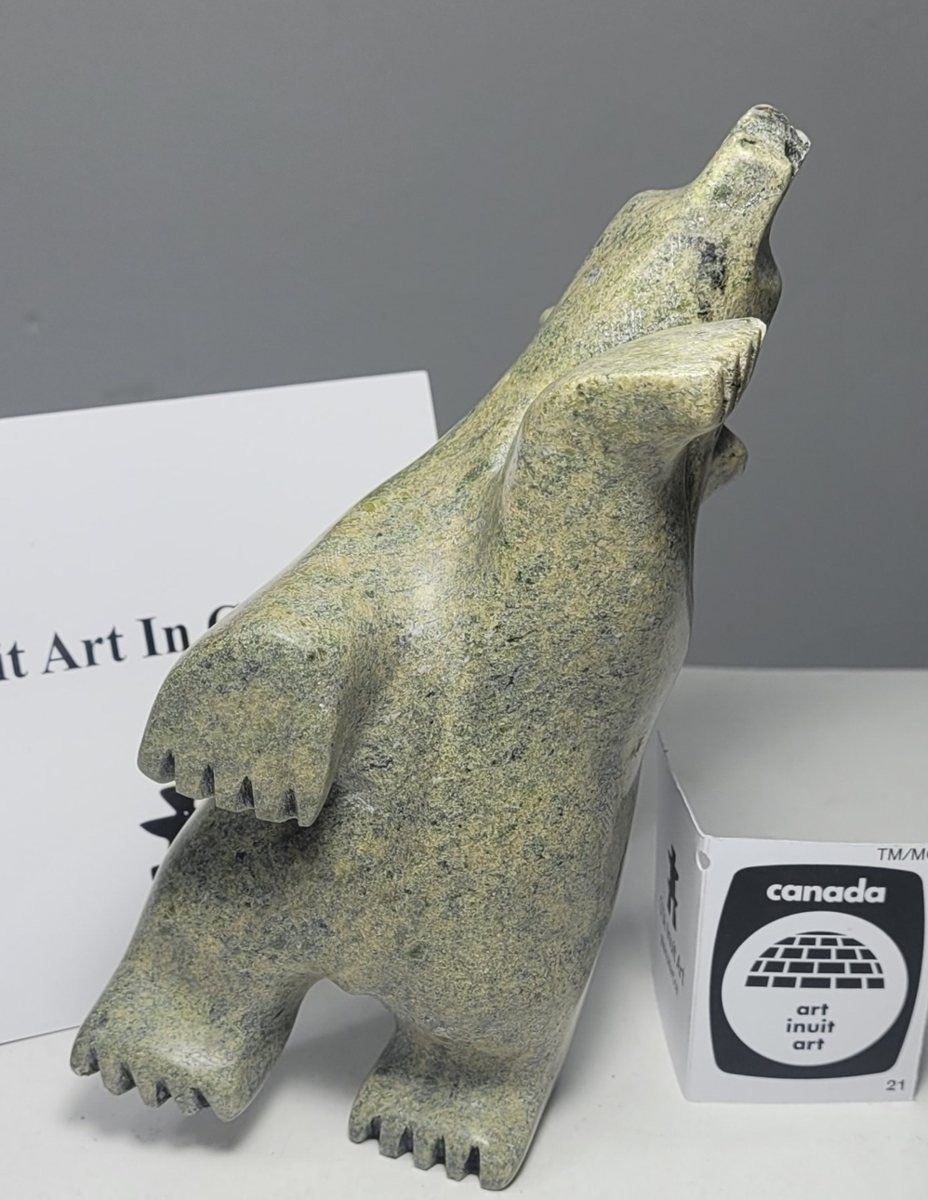
Smaller bears can be surprisingly versatile. They can work beautifully on:
They can also be an excellent way to begin collecting Inuit art without committing to a large sculpture.
Larger carvings naturally need more room, but they can make a wonderful focal point in a living room, entrance, office, or other open space.
The right setting gives the sculpture room to be seen from different angles.
There is no single price for Inuit dancing bear sculptures. Individual carvings can vary considerably, and that is exactly why looking at the pieces themselves is useful.
Several factors can influence the price of a dancing bear:
Larger sculptures generally require more stone and more work.
The artist's identity and body of work can be important to collectors.
Colour, markings, and the characteristics of the stone can vary significantly.
The form, detail and overall execution of the sculpture all matter.
Two carvings of similar size can still have very different visual appeal and value.
Our current collection includes dancing bears starting around $259, with larger and exceptional works reaching into the thousands.
That range means you do not need a major collecting budget to begin exploring the form.
If you are ready to buy dancing bear sculptures, give us an idea of your budget and what you are looking for. We can show you pieces that fit rather than sending you on a hunt through the entire collection.
Have a price range in mind? Contact us, and we can help you find suitable pieces.
An Inuit dancing bear is a stone carving that typically shows a bear standing upright, often balanced on one foot with its arms raised. The form is strongly associated with Inuit sculptor Pauta Saila and has since been interpreted by many Inuit artists.
The name comes from the characteristic upright pose, which can look as though the bear is dancing. Pauta Saila explained that his bears were inspired by bears he observed while hunting and were not necessarily intended to represent dancing.
No. Pauta Saila is particularly important to the history of the form, but many Inuit artists have created their own dancing bear sculptures.
Yes. Inuit stone sculptures are shaped by hand using carving tools, with the artist developing the form from the original piece of stone.
Prices vary according to size, artist, stone, carving style, and the individual sculpture. Our current collection includes pieces starting around $259, with larger and exceptional works reaching much higher prices.
Consider the size, stone, pose, carving details, and artist. Most importantly, choose a sculpture you genuinely enjoy looking at, and that works well in the space where you plan to display it.
Yes. We have smaller pieces suitable for shelves, desks, cabinets, and other compact spaces, along with larger sculptures.
Yes. Our Toronto showroom is open by appointment seven days a week, from 8:00 am to 8:00 pm.
Yes. GTA Inuit Art offers a 10% discount on all purchases.
Absolutely. Tell us the approximate size, price range, and type of space you have in mind, and we can help you find suitable pieces.
Keep the sculpture somewhere stable where it will not be knocked or scratched. Dust gently with a soft cloth or soft brush, and avoid unnecessary handling. If a carving is damaged, contact us before attempting a repair yourself.
Yes. We have more than 35 years of experience with carving repairs. Send us clear photographs of the damage, the sculpture's dimensions, and your contact information, and we can provide an estimate.